
Quick Summary
A professional dryer vent inspection identifies hidden lint accumulation, damaged transition ducts, and airflow blockages that reduce appliance efficiency and create serious fire hazards in residential exhaust systems. Meridian Air Duct Cleaning Service Vancouver recommends annual safety evaluations and professional cleaning using specialized vacuum extraction to safely clear concealed ductwork without the risks associated with DIY drill kits. Homeowners can recognize warning signs like prolonged drying cycles and hot dryer cabinets, understand standard inspection costs, and call (833) 637-3677 to schedule same-day service with a free estimate.
Dryer Vent Inspection: Safety and Airflow Checks
A thorough dryer vent inspection does far more than confirm whether warm air is blowing out of your exhaust hood. Over months of regular laundry cycles, lint can bypass the lint trap and settle along exhaust walls, narrowing duct pathways, restricting airflow, and placing added strain on your dryer motor.
In homes with long or complex duct runs routed through unheated crawlspaces, basements, or attics, warm exhaust air can cool quickly. In these unconditioned spaces, damp conditions may cause lint to accumulate and harden into stubborn blockages. A professional dryer vent inspection spots these hidden restrictions to address general concerns such as reduced appliance efficiency, potential mold issues, or fire hazards.[2] See also Same-Day Air Duct Cleaning Service in Vancouver | 10% Off & Free Estimate | Same-Day Service.
What Is Included in a Professional Dryer Vent Inspection?
Quick Answer: A professional dryer vent inspection evaluates your exhaust setup from the appliance connection to the outside terminal. The technician examines the transition duct behind the dryer for damage or crushing, inspects the ductwork for lint buildup or disconnections, and confirms the exterior hood is clear of debris, animal nests, or insect blockages.
As recommended by Meridian Air Duct Cleaning Service Vancouver, a dryer vent inspector typically evaluates three main zones during a standard service call:
1. Appliance Connection and Transition Duct
Technicians start directly behind the appliance. They inspect behind the dryer to visually observe the transition duct and verify that it is not made of unsafe, flimsy materials. Inspection standards instruct inspectors to look behind the unit and visually examine this transition piece to ensure it is not kinked, crushed, damaged, or leaking exhaust air into living spaces.[3]
2. Duct Run and Airflow Assessment
Technicians assess the overall duct pathway for signs of blockage, improper routing, or physical damage. They check for airflow restrictions along concealed runs inside walls, floor joists, or crawlspaces, looking for separated joints, sagging pipes, or heavy lint accumulations that could impede exhaust venting.
3. Exterior Termination Hood and Flapper
At the outdoor exhaust terminal, the technician verifies that the damper flap opens properly during operation and closes when the dryer stops. They inspect the hood to ensure it is not blocked by animals, birds, insects, leaves, or accumulated lint.
Critical Dryer Vent Components Evaluated During an Inspection
Every junction in your exhaust line affects airflow and fire safety. During a residential dryer vent inspection appointment, technicians carefully evaluate key components:
- Transition Hose: Visually observing the transition duct directly behind the dryer to check for kinks, crushing, tears, or improper materials.
- Concealed Ducts: Checking that concealed duct runs are properly connected, supported, and free of screws or obstructions that catch lint.
- Elbows and Bends: Assessing turns and bends along the line that may restrict airflow or collect lint over time.
- Crawlspace and Attic Runs: Checking whether duct runs passing through unheated areas are secure and protected against excessive condensation buildup.
- Exterior Vent Terminal: Confirming the vent cap opens freely and is not blocked by animals, pests, or restrictive screens that trap lint.
Warning Signs That Demand a Dryer Vent Safety Check
Need dryer vent inspection?
We’re available now — call for a fast, free estimate.
Dryer vent problems usually develop gradually. If you notice any of the following warning signs, consider scheduling a dryer vent safety check:
Drying Cycles Taking Abnormally Long
When moist air cannot escape through a restricted exhaust pipe, clothes may remain damp at the end of a normal cycle. Having to run loads through multiple cycles is a common indicator of possible duct restriction.[5]
Excessive Heat on the Dryer Cabinet and Laundry Room
Restricted ducts can trap hot air inside the appliance drum and cabinet. If the top or sides of your dryer feel unusually hot to the touch, or if your laundry room feels excessively humid and warm, exhaust air may be backing up rather than venting outdoors.
Musty or Burning Odors
Lint is highly combustible. When it collects near heating components or inside restricted ducts, it can produce a distinct hot or scorched smell. Musty odors are also a general concern when trapped moisture accumulates in unconditioned duct runs.
Exterior Flapper Barely Moves
When the dryer is running, step outside and watch the exterior vent hood. The damper should open readily with steady exhaust air blowing out. If the flap stays closed or flutters only weakly, the line may have a blockage or disconnection.
Concealed Duct Hazards: Beyond the Exterior Vent Hood
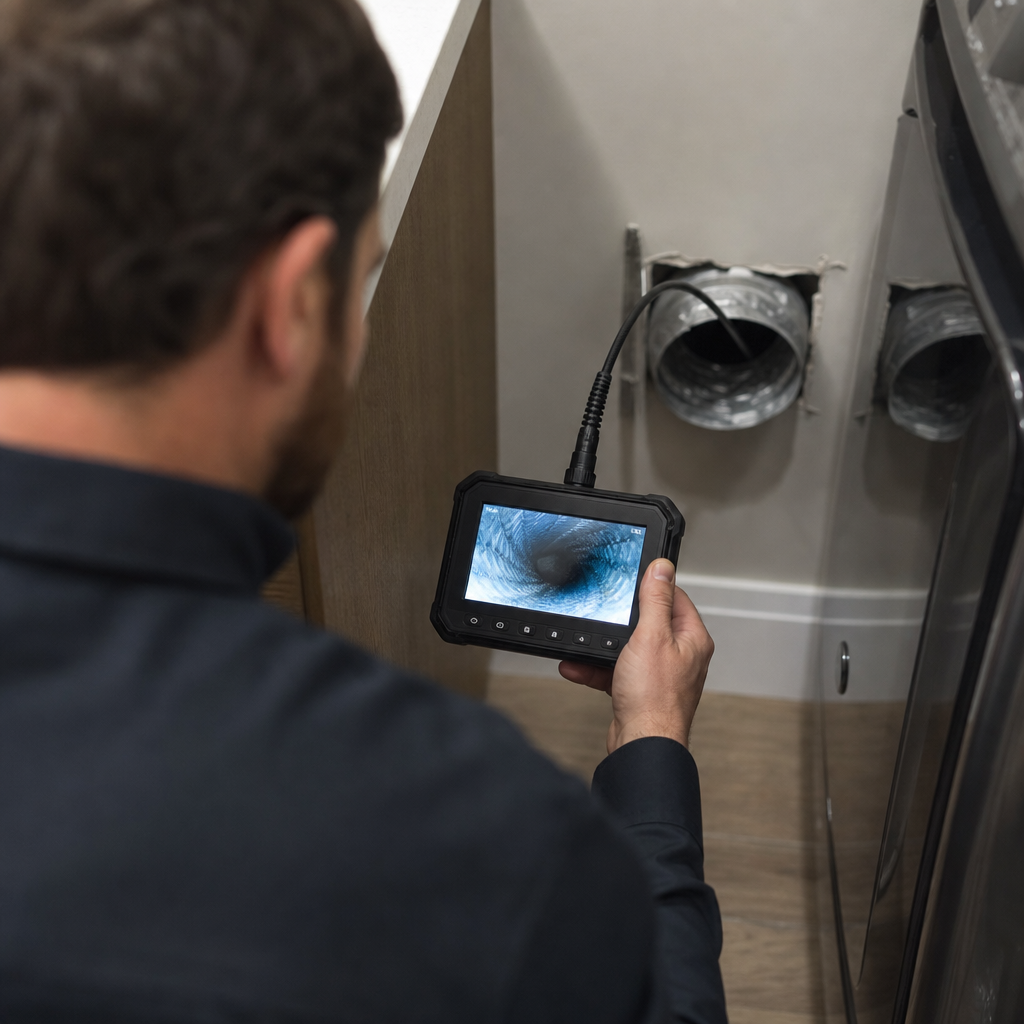
Many homeowners assume their vents are clear because they see small amounts of lint exiting the outdoor hood. This surface check can be deceptive.
When exhaust ducts travel long distances through unheated spaces, warm, moist air cools rapidly. As moisture collects on cold duct walls, lint can adhere to the damp surface and accumulate over time, gradually narrowing the interior airway.
Surface lint checks at the exterior vent cap cannot detect hidden restrictions inside walls or crawlspaces. Without a proper physical check, a restricted line can go unnoticed until appliance performance drops significantly or accumulated lint creates a safety concern.
Professional Inspection Methods vs. DIY Kits
Hardware store cleaning kits often feature flexible nylon rods attached to drill bits. While these can clear light dust near the opening, they carry risks when used without professional care:
- Disconnected Duct Joints: Rotary brushes caught on interior edges can pull joints apart inside walls or crawlspaces, venting moisture and exhaust directly into your home.
- Lint Compaction: Pushing a brush through a long line without adequate vacuum extraction can compact loose lint into a solid plug at an elbow bend.
- Damaged Flexible Ducts: Aggressive spinning brushes can tear or puncture flexible transition ducts behind the dryer.
Professional vent cleaning services, including Meridian Air Duct Cleaning Service Vancouver, use specialized brushes and vacuum systems that pull dislodged lint outward, protecting your ductwork and indoor air quality.
How Much Does a Dryer Vent Inspection and Cleaning Cost?
Need dryer vent inspection?
We’re available now — call for a fast, free estimate.
Dryer vent inspection and cleaning costs depend on the service required and the layout of the ductwork:
- Dryer Vent Inspection: A standalone dryer vent inspection typically costs about $30 to $60.
- Dryer Vent Cleaning: Professional dryer vent cleaning costs around $131 on average, with typical service ranges falling between $90 and $170 depending on the provider and region.
- Length and Routing: Long duct runs or lines routed through crawlspaces, attics, or roof terminations may increase cleaning and labor costs.
- Repairs Needed: Replacing crushed or damaged transition ducts and resealing disconnected joints will add modest material and labor costs.
How Often Should You Schedule a Dryer Vent Safety Inspection?
Standard safety guidelines from leading fire safety organizations establish clear maintenance recommendations for residential laundry setups:
- Annual Professional Inspection: The U.S. Fire Administration advises that gas-powered dryers be inspected by a professional annually and that the venting system behind the dryer be checked for damage, crushing, or restriction.
- Yearly Lint Removal: The National Fire Protection Association (NFPA) recommends that homeowners clean lint from dryer vent pipes once a year and periodically verify that the outdoor terminal is not blocked by animal nests, insects, leaves, or debris.
- Regular Household Checks: Periodically inspect behind the dryer to ensure the transition duct remains uncrushed and visually clear of damage.
Frequently Asked Questions About Dryer Vent Inspection
How often should a dryer vent be inspected?
According to Meridian Air Duct Cleaning Service Vancouver, dryer vent systems should be checked regularly, with professional inspections recommended annually for gas dryers and lint cleaning recommended at least once a year by fire safety organizations.[1]
What is included in a professional dryer vent inspection?
A professional inspection includes looking behind the dryer to visually observe the transition duct, checking for damage, crushing, or airflow restriction, and verifying that the exterior vent hood is clear of lint, debris, animals, and insects.
How much does a dryer vent inspection and cleaning cost?
A standalone dryer vent inspection typically costs about $30 to $60, while dryer vent cleaning averages around $131.
What are the warning signs that my dryer vent is clogged?
Common signs include clothes taking longer than usual to dry, the dryer cabinet feeling excessively hot, musty or burning odors during operation, lint buildup around the appliance, and weak airflow at the exterior vent hood.
Can a clogged or damaged dryer vent cause a house fire?
Yes. Dryer lint is highly combustible. When a restricted or crushed duct traps heat, lint accumulating near heating elements or within the ductwork can ignite, creating a serious fire hazard.
Do home inspectors inspect dryer vents during standard home inspections?
Home inspectors perform a visual check of readily accessible areas. Under standard inspection guidelines, they look behind the dryer to visually observe the transition duct for crushing, damage, disconnection, or improper materials.[4]
Need dryer vent inspection?
We’re available now — call for a fast, free estimate.
Sources
- Clothes Dryer Fires in Residential Buildings (2008-2010) – usfa.fema.gov (2010)
- Fire Causes – usfa.fema.gov (2010)
- October 21, 2019 – downloads.regulations.gov (2019)
- Home fires involving clothes dryers and washing machines – NFPA – nfpa.org (2014)
- Dryer Vent Fires: The Statistics Every Homeowner Should Know – appliancerepairalliance.org
Related reading: Commercial Ventilation Cleaning Near Me in Vancouver | 10% Off & Free Estimate | Same-Day Service
Related reading: Commercial Duct Cleaning – Call Now-10% Off – Same-Day Service – Free Estimate
Related reading: Emergency Duct Cleaning – Call Now-10% Off – On-Site in 60 Minutes – Free Estimate
Frequently Asked Questions
What types of dryer transition ducts fail a professional safety inspection?
Flexible plastic, vinyl, and flimsy foil accordion hoses typically fail safety checks because they are highly flammable and easily crush or kink. Meridian Air Duct Cleaning Service Vancouver inspects these connections to ensure transition ducts comply with safety codes, recommending durable semi-rigid or solid metal piping instead.
Can technicians inspect dryer vents that route through crawlspaces or exit on the roof?
Yes, certified technicians evaluate entire exhaust lines, including vertical paths and runs through unheated crawlspaces where condensation causes heavy lint accumulation. Meridian Air Duct Cleaning Service Vancouver uses specialized inspection tools and extraction vacuums to assess concealed lines and roof terminals safely.
How long does a professional dryer vent inspection take, and how should I prepare?
A standard dryer vent inspection typically takes 30 to 45 minutes, though extended or complex duct runs may require additional time. Homeowners can prepare by clearing laundry, detergents, and storage items away from the dryer to ensure technicians have unobstructed access to the connection behind the unit.
About the author
 |
David Mitchell David Mitchell is a certified HVAC technician with over 12 years of experience specializing in commercial and residential air duct systems in the Pacific Northwest. He holds a degree in Heating, Ventilation, Air Conditioning, and Refrigeration Engineering Technology from Perry Technical Institute. David focuses on educating property owners on the importance of regular dryer vent safety inspections and commercial ventilation maintenance for optimal indoor air quality. |
Dusty vents or weak airflow at home?
We’re available now — call for a fast, free estimate.
Call Now - Free Estimate