
Quick Summary
Suspected fungal growth inside heating and ventilation systems compromises indoor air quality and demands immediate system shutdown alongside prompt professional remediation. Meridian Air Duct Cleaning Service Vancouver resolves contamination across residential and commercial properties by safely cleaning visible mold from hard-surface ductwork, replacing compromised porous materials, and fixing underlying moisture sources. Readers will understand standard remediation protocols and pricing factors, empowering them to call (833) 637-3677 to request a free estimate and book same-day HVAC mold cleaning.
HVAC Mold Cleaning: Remediation and Best Practices
Professional HVAC mold cleaning requires prompt investigation, moisture control, cleaning visible mold on hard-surface ducts, and replacing contaminated porous materials to resolve active fungal growth inside heating and ventilation systems.[2]
A furnace or air conditioner can harbor microbial growth inside its components. Remediating mold properly involves investigating promptly, tracking down and controlling the moisture source, and cleaning or replacing affected components. See also Residential HVAC Duct Cleaning Cost and Quote in Vancouver | 10% Off & Free Estimate | Same-Day Service.
Remediation technicians inspect the heating and cooling layout, clean visible mold from hard-surface duct interiors, and replace contaminated porous materials.
What Is Professional HVAC Mold Cleaning and Remediation?
Professional HVAC mold cleaning is a remediation process designed to address mold contamination in heating and ventilation systems. Technicians shut off suspected contaminated systems, clean visible mold on hard-surface duct walls, discard and replace contaminated porous materials, and control moisture to prevent future growth.[4]
Rather than simply masking odors, professional remediation, as noted by Meridian Air Duct Cleaning Service Vancouver, focuses on moisture control, cleaning visible mold on hard surfaces, and replacing porous materials that cannot be cleaned.
Immediate Steps When HVAC Mold Is Suspected
The US EPA advises that any HVAC system suspected of mold contamination should be shut down immediately and left off until properly investigated. Running the system can circulate spores to other areas of the building. Any suspected contamination should be investigated promptly.[3]
The Core Process: Source Containment to Moisture Control
To clean a contaminated system safely, technicians follow a standard sequence:
- System Shutdown: Turn off power to the HVAC system suspected of mold contamination.
- Prompt Investigation: Inspect accessible sections of the system to evaluate the extent of growth and locate moisture sources.
- Physical Cleaning: Clean visible mold from hard-surface ducts.
- Material Replacement and Moisture Control: Remove and replace contaminated porous materials that cannot be cleaned, and correct the underlying moisture issue.
Mechanical Agitation and Source Removal
True mold remediation centers on physical cleaning and moisture control. Simply spraying a mist or biocide into a duct will not solve the issue. Chemical treatments alone do not eliminate the damp conditions that caused the problem in the first place.
Why Biocide Fogging Alone Fails
According to the US EPA, controlling moisture is the most effective way to prevent mold from growing in ductwork. Applying chemical sprays without physically cleaning away microbial growth leaves organic residue behind.[1]
Cleaning visible mold on hard surfaces, combined with replacing contaminated porous components and controlling moisture, is necessary to remediate contaminated ventilation equipment, according to Meridian Air Duct Cleaning Service Vancouver.
| Cleaning Method | Surface Deposit Removal | Deep Biofilm Removal | Moisture Correction |
|---|---|---|---|
| Standard Shop-Vac | Pulls loose dust near vents | None | No |
| Chemical-Only Fogging | Leaves dead biomass in place | None (coats surfaces only) | No |
| Mechanical Cleaning and Replacement | Cleans visible mold on hard surfaces | Removes contaminated porous materials | Paired with moisture repairs |
Maintaining HVAC Cleanliness
When air ducts remain clean and dry, mold lacks the moisture it needs to grow. For hard-surface metal ductwork with visible mold, mechanical cleaning removes growth without damaging the metal.
Evaluating System Components and Materials
Remediation methods depend on whether components are constructed from hard surfaces or porous materials.
Moisture in Cooling Components
During cooling cycles, condensation can accumulate in drain pans and related parts, creating conditions that support mold growth. Visible mold on system components warrants prompt investigation and moisture control.
Evaluating Contaminated Materials
The appropriate action depends on the material type:
| Material Type | Contamination Type | Recommended Action |
|---|---|---|
| Bare Sheet Metal (Hard Surface) | Visible surface mold | Clean visible mold from the surface. |
| Fibrous Glass or Porous Insulation | Mold penetration or moisture damage | Remove and replace. Porous materials cannot be completely cleaned once mold penetrates the fibers. |
Addressing Mold in Ducts and Return Lines
Ductwork materials dictate whether a component can be cleaned or must be replaced. According to Meridian Air Duct Cleaning Service Vancouver, rigid sheet metal can be cleaned of visible mold, whereas contaminated porous materials must be removed and replaced.
Rigid Sheet Metal vs. Flexible Ductwork
| Duct Type | Cleaning Method | When to Replace |
|---|---|---|
| Rigid Sheet Metal | Clean visible mold from hard surfaces | Severe physical damage or unrepairable seam separation |
| Flexible Ductwork / Porous Insulation | Surface dusting if unaffected | Internal mold contamination, torn materials, or water damage |
Return Air Leaks and Moisture Control
Unsealed return ducts can pull unconditioned, damp air into the ventilation system. Technicians inspect these areas by checking:
- Vapor jacket condition: Look for moisture accumulation or damaged vapor barriers.
- Material type: Identify hard metal surfaces versus porous acoustic liners to determine if insulation needs replacement.
- Joint sealing: Seal leaks to prevent humid air from entering the airstream and control moisture.
Restoring the HVAC Blower Motor and Register Grilles
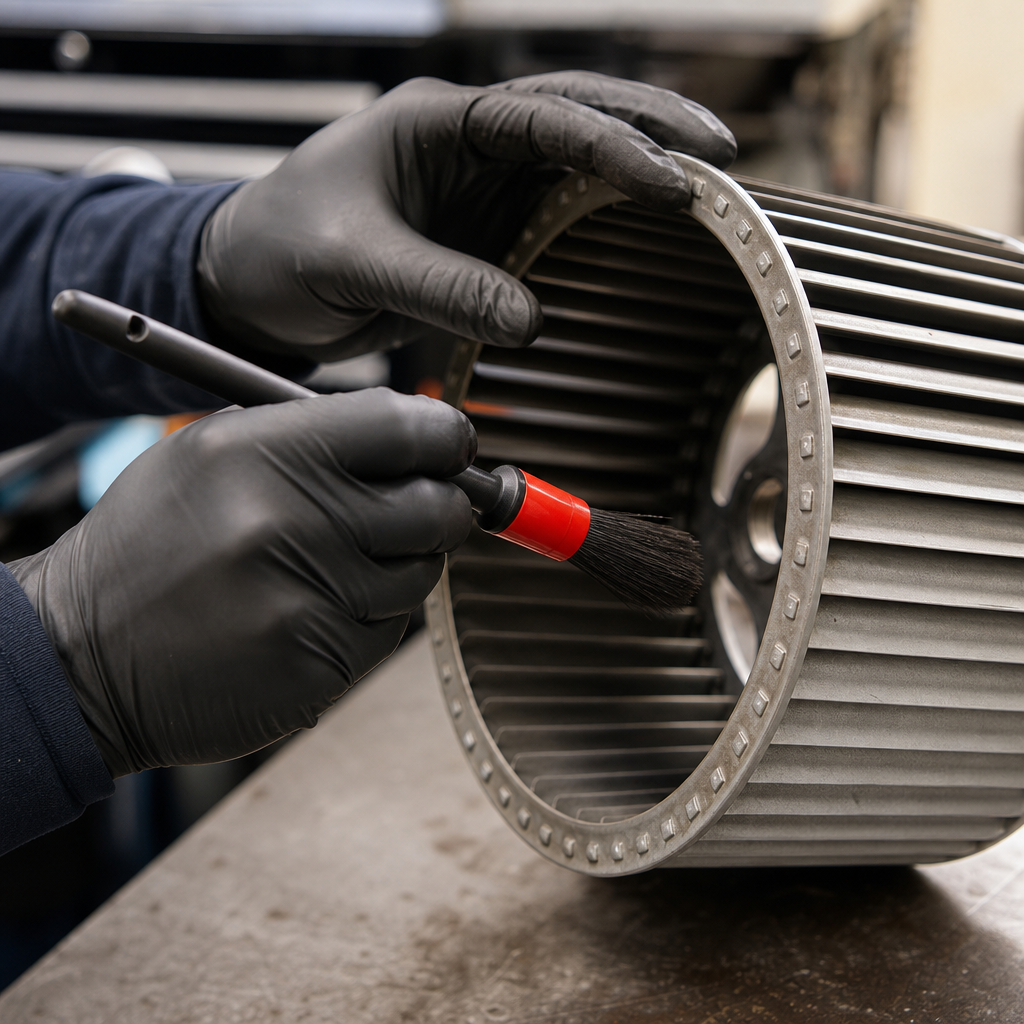
Cleanup includes addressing visible mold on accessible hard surfaces of the air handler assembly and room registers.
Blower Assembly Cleaning
Specialists from Meridian Air Duct Cleaning Service Vancouver clean visible mold and accumulated dust from the hard surfaces of the blower assembly and resolve any associated moisture sources.
Cleaning Supply Grilles and Vent Boots
When dark spots or musty odors appear at registers, grilles and boots need attention:
- Clean Grilles: Remove, wash, and dry supply and return grilles thoroughly.
- Clean Boot Interiors: Clean visible mold on hard-surface boot interiors.
- Reinstall and Seal: Reattach grilles tightly to prevent humid air intrusion.
Protecting System Components During Remediation
Professional cleaning must protect sensitive heating and cooling parts. Technicians rely on physical cleaning of visible mold on hard surfaces and the replacement of water-damaged porous insulation while safeguarding electrical controls.
What Does HVAC Mold Cleaning Cost?
According to the US EPA, typical duct cleaning services range from $450 to $1,000 per system. Additional remediation and component services are estimated below and vary based on the size of the home, accessibility of ductwork, and extent of contamination.
Estimated Service Price Ranges
| Service Scope | Typical Price Range | What Is Included |
|---|---|---|
| Standard Duct Cleaning (EPA Range) | $450 – $1,000 | Cleaning of duct runs, trunk lines, and basic system components. |
| Antimicrobial Surface Treatment (Estimate) | $70 – $150 (Estimated) | Antimicrobial wash applied to hard surfaces after cleaning. |
| Blower Wheel & Coil Cleaning (Estimate) | $150 – $350 (Estimated) | Cleaning visible buildup from the blower assembly and coil surfaces. |
| Extensive Remediation / Duct Replacement (Estimate) | $800 – $2,500+ (Estimated) | Replacing contaminated porous duct materials and correcting moisture issues. |
What Drives Remediation Costs?
- System Size and Vent Count: Larger homes with multiple units or extensive supply runs require more time and labor.
- Accessibility: Ducts located in tight crawlspaces or low attics take longer to access.
- Material Replacement: Replacing contaminated porous fiberglass insulation increases material and labor costs compared to cleaning bare metal.
- Moisture Source Repairs: Correcting condensation problems, drain line blockages, or plumbing leaks factors into total project costs.
How to Prevent HVAC Mold Regrowth
According to the US EPA, controlling moisture is the most effective way to prevent mold in air ducts.
Frequently Asked Questions About HVAC Mold Cleaning
How quickly should an HVAC system be inspected, and what does it cost?
If mold contamination is suspected, shut the system off immediately and arrange for prompt investigation. Standard duct cleaning ranges from $450 to $1,000 according to the US EPA, though extensive remediation involving material replacement may cost more depending on system size and layout.
What should be done if mold is found in an HVAC system?
Turn off the system immediately so it stops circulating air, and arrange for prompt investigation. As explained by Meridian Air Duct Cleaning Service Vancouver, remediation involves cleaning visible mold on hard-surface ducts, removing and replacing contaminated porous materials, and controlling the moisture source to prevent future growth.[5]
Sources
- Mold contamination and air handling units – pubmed.ncbi.nlm.nih.gov (2007)
- [PDF] DOHS Fact Sheet On HVAC Duct Cleaning – ORS – ors.od.nih.gov (2010)
- Mold Testing or Sampling | US EPA – epa.gov (2001)
- Mold Course Chapter 5: | US EPA – epa.gov
- Should You Have the Air Ducts in Your Home Cleaned? – epa.gov
Related reading: Commercial Kitchen Exhaust Cleaning – Call Now-10% Off – Same-Day Service – Free Estimate
Related reading: Average Cost of Duct Cleaning – Call Now-10% Off – Same-Day Service – Free Estimate
Related reading: Residential Duct Cleaning | 10% Off & Free Estimate | Same-Day Service
Frequently Asked Questions
How do professionals physically remove mold from sheet metal ducts without spreading spores?
Meridian Air Duct Cleaning Service Vancouver utilizes specialized rotating brush equipment paired with powerful negative air pressure to scrub hard-surface duct interiors. This mechanical agitation lifts visible fungal growth while containment systems prevent spores from circulating into your living or working spaces.
Why must porous duct insulation be replaced rather than cleaned when mold is detected?
Fungal spores penetrate deep into the fibers of porous insulation and flexible ducting, making surface vacuuming or biocide sprays ineffective. Meridian Air Duct Cleaning Service Vancouver carefully removes and replaces compromised porous components to ensure the root source of contamination is eliminated.
How can I book same-day HVAC mold remediation or request a pricing estimate?
Property owners can call Meridian Air Duct Cleaning Service Vancouver at (833) 637-3677 to schedule a prompt inspection and request a free, no-obligation estimate. Our local specialists provide same-day service across residential and commercial properties to quickly restore healthy indoor air quality.
About the author
 |
Sarah Jenkins Sarah is an HVAC professional with over 8 years of experience in residential and commercial indoor air quality. She holds a degree in Environmental Science from Washington State University and is certified by the National Air Duct Cleaners Association (NADCA). Her expertise focuses on educating the Vancouver community about efficient HVAC maintenance and effective contaminant removal strategies. |
Dusty vents or weak airflow at home?
We’re available now — call for a fast, free estimate.
Call Now - Free Estimate