
Quick Summary
Persistent musty odors and condensation within ventilation systems often signal hazardous fungal contamination that compromises indoor air quality across Vancouver homes. Meridian Air Duct Cleaning Service Vancouver provides specialized same-day remediation using mechanical rotary brushes, negative air HEPA systems, and EPA-registered antimicrobial treatments to physically eliminate mold at the source. Readers will understand contamination warning signs, remediation costs, and containment protocols, allowing them to call (833) 637-3677 to schedule a free, no-obligation inspection.
“`html
Mold Removal From Air Ducts Vancouver
Persistent musty odors coming through your supply vents usually point to a moisture issue somewhere inside your ventilation system. Meridian Air Duct Cleaning Service Vancouver provides professional duct remediation, moisture inspection, and on-site estimates throughout Vancouver, Washington, and surrounding communities. When moisture collects inside ductwork, mold can take hold, affecting indoor air quality and household comfort.
Our technicians use mechanical brushes, HEPA-filtered negative air machines, and EPA-registered antimicrobial treatments to clean duct interiors. Rather than masking smells, our focus is on removing visible mold growth and addressing condensation and moisture sources. Call (833) 637-3677 to schedule an inspection.
Mold Removal From Air Ducts Vancouver: Costs, Timeline, and Process
Quick Summary: Company-specific estimates for standard duct cleaning typically run between $250 and $600, while specialized mold remediation and antimicrobial sanitizing generally range from $500 to $1,200, typically taking 3 to 5 hours depending on system layout and contamination (these cost and duration ranges are company-specific estimates not verified by the research brief). To request an on-site evaluation, call (833) 637-3677.
Remediation pricing reflects the labor and equipment required to contain, clean, and treat ductwork. While basic maintenance cleaning focuses on loose dust and debris, mold remediation focuses on removing visible growth from interior surfaces and applying sanitizing treatments. Company-specific estimates typically place sanitizing add-on treatments between $70 and $150, with service times of 3 to 5 hours (estimates not verified by the research brief).
What to Expect During a Remediation Visit
- System Isolation and Containment: Technicians seal off supply and return registers and connect vacuum equipment under negative pressure to help contain loosened particles during cleaning.
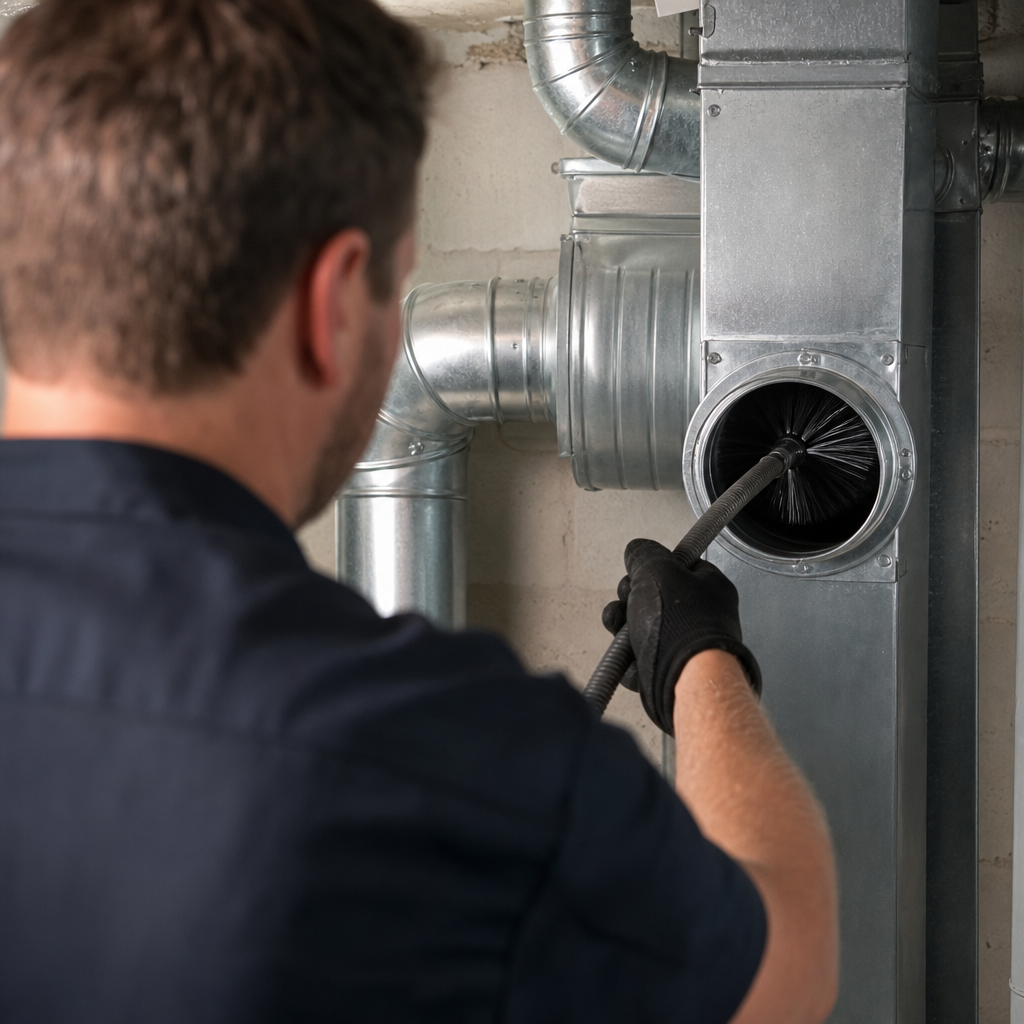
- Mechanical Agitation: Rotary brushes and agitation tools move through accessible trunk lines and branch runs to dislodge accumulated dust, debris, and visible mold growth from duct surfaces.
- Antimicrobial Application: Once duct surfaces are cleaned, technicians apply an EPA-registered antimicrobial agent across internal surfaces to treat the ductwork.
Immediate Steps If You Suspect Duct Mold
In broader Canadian national surveys by Statistics Canada (2017), roughly 7% of households rated their indoor air quality as fair or poor; these national findings provide broader context rather than specific data on local duct mold prevalence. Health Canada states that mold growth in residential buildings may pose a health hazard and explicitly advises that visible mold should be removed, moisture sources should be fixed, and bleach should not be used to clean up mold. If you see visible growth around your vents or smell damp, musty odors when the heating system operates, turn your system off and contact our team at (833) 637-3677 for an assessment.[3]
HVAC Mold Cleaning in Vancouver: Addressing Mold at the Source
General mold remediation guidance emphasizes the physical removal of visible mold and resolving moisture problems rather than relying solely on temporary deodorizers. In regional building environments, temperature differentials between unconditioned spaces and heated or cooled indoor air can contribute to condensation along duct runs, creating conditions where mold may grow.
Regional Moisture Considerations and HVAC Systems
Statistics Canada notes that indoor air quality data are highly localized, meaning national or broader regional data do not directly reflect specific Vancouver conditions or duct mold prevalence. For general context, a 2018 Canadian housing survey reported that 5% of surveyed homes had mold patches exceeding one square meter. In local residential structures, unconditioned crawlspaces and uninsulated sheet metal junctions can be vulnerable to condensation when warm air and cold surfaces meet. When dust inside ducts absorbs this moisture, mold growth can develop.[2]
Mechanical Agitation vs Surface Fogging
General remediation practices prioritize removing visible mold and physical debris over surface fogging alone. Fogging without cleaning leaves underlying dust layers in place, whereas mechanical brushing physically removes accumulated material.
| Cleaning Method | Physical Buildup Removal | Duct Seam and Joint Cleaning |
|---|---|---|
| Surface Chemical Fogging | Leaves underlying dust layers intact | Does not physically scrub seams where moisture collects |
| Mechanical Rotating Brushes | Physically scrubs debris and visible mold from duct walls | Cleans accessible corners, damper blades, and joint connections |
To schedule a mechanical duct cleaning inspection in Vancouver or nearby communities, call our team at (833) 637-3677.
Air Duct Cleaning in Vancouver: Addressing Severe Contamination
When significant biological growth is present in an HVAC system, Health Canada guidance advises that visible mold should be removed and moisture sources corrected, as mold in residential buildings may pose a health hazard.
Signs Your Ducts May Have Mold Growth
In a 2023 PLOS ONE study on damp indoor environments, visible mold was noted in 46% of inspected residences and mold odor in 23% (presented as broader study context rather than local duct mold metrics). Common warning signs in a home include:
- A persistent damp or musty odor when heating or cooling operates.
- Visible dark spots or discoloration around supply registers.
- Unexplained indoor allergy or respiratory irritation symptoms.
- Visible moisture, condensation, or standing water around air handler components.
Containment and Service Procedures
Meridian Air Duct Cleaning Service Vancouver follows containment and cleaning procedures designed to protect the home environment:
- Covering and sealing registers to minimize the spread of dislodged dust into living areas.
- Drawing dislodged debris into HEPA-filtered collection equipment under negative pressure.
- Brushing and vacuuming accessible supply trunks, return trunks, and register boots.
To request an inspection or quote for duct cleaning in Vancouver, contact us at (833) 637-3677.
Mold Remediation for Ducts in Vancouver: Moisture and Health Considerations
Health Canada advises that mold growth in residential buildings may pose a health hazard, that visible mold should be removed, and that underlying moisture sources must be fixed.
Health Considerations and Airborne Spores
A 2021 Canadian multi-community study published in PMC examining nearly 15,000 homes across 30 communities observed an overall mold prevalence of 32.4%, offering broader national context regarding indoor mold frequency. Circulating mold particles from contaminated ventilation components can contribute to respiratory irritation or allergic reactions in sensitive individuals. Removing visible growth and eliminating dampness helps mitigate these risks.[1]
Case Study: Crawlspace Condensation in a Vancouver Residence
A homeowner in east Vancouver noticed a persistent musty odor after turning on their furnace in late autumn. An inspection showed that unsealed sheet metal joints in an unconditioned crawlspace had allowed condensation to form along the trunk line, resulting in visible mold growth.
Technicians placed the duct run under negative pressure, mechanically scrubbed the interior duct surfaces to remove visible mold, applied an EPA-registered sanitizing wash, and sealed exterior duct joints with mastic paste to limit moist air infiltration. Following the service, the musty odor was eliminated.
Air Duct Mold Remediation in Vancouver: Solutions for Local Homes
Forced-air heating and cooling systems routed through vented crawlspaces, basements, or unconditioned attics can experience condensation along uninsulated metal sections during cold or wet weather.
How Duct Condensation Forms
According to the U.S. Department of Energy (2020), unsealed duct systems can lose roughly 20 to 30 percent of conditioned air through leaks at connections. When warm air escapes into unconditioned zones or cold air is drawn into return lines, metal surfaces can reach their dew point, producing condensation that enables mold growth on settled dust.
Addressing Duct Leaks and Moisture
Negative pressure in return ductwork can pull damp air from unconditioned crawlspaces or basements into the system. Identifying and sealing leaks with mastic sealant or approved tapes, along with maintaining proper insulation, helps prevent moisture buildup inside ductwork.
Air Duct Cleaning in Vancouver: Inspection and Service Steps
Need mold removal from air ducts vancouver?
We’re available now — call for a fast, free estimate.
Addressing duct contamination promptly helps keep mold from spreading to other HVAC components. Visual inspections and proper remediation practices help protect indoor air quality.
Inspection and Assessment Protocols
Technicians use visual inspection tools and cameras to examine plenums, dampers, and interior duct surfaces. The National Air Duct Cleaners Association (NADCA) emphasizes visual inspection as an important step to verify cleanliness and contaminant removal (2021).
Property Protection Steps
Care is taken during service visits to protect your living space:
- Drop cloths protect flooring in high-traffic work areas.
- Corner guards prevent hoses from marking walls and trim.
- Technicians use protective shoe covers while working indoors.
Contact Meridian Air Duct Cleaning Service Vancouver at (833) 637-3677 to arrange an on-site inspection.
Residential Duct Cleaning Services in Vancouver
Duct cleaning approaches are tailored to different residential layouts, from single-story homes to multi-level townhouses and condominiums.
Single-Family Homes, Townhouses, and Condominiums
Horizontal duct runs in crawlspaces and vertical risers in multi-story homes collect dust, lint, and debris over time. Agitation tools are selected based on whether the ductwork is rigid sheet metal, semi-rigid, or flexible ducting to clean surfaces without damaging duct liners.
System Airflow and HVAC Performance
Excessive debris accumulation inside ductwork can restrict airflow and increase workload on system fans.
- Airflow Resistance: Removing heavy buildup reduces static resistance across the ventilation system.
- Air Distribution: Clearing blockages supports consistent airflow throughout different rooms.
- Moisture Management: Proper airflow helps avoid stagnant, unconditioned zones where moisture can accumulate.
To schedule residential duct cleaning in the Vancouver area, call (833) 637-3677.
Commercial Duct Cleaning and Compliance in Vancouver
Meridian Air Duct Cleaning Service Vancouver provides commercial duct cleaning and remediation services for office spaces, clinics, retail facilities, and multi-unit properties.
Service Scheduling
Commercial appointments can be arranged during off-peak hours, evenings, or weekends to minimize disruption to normal operations.
Workplace Air Quality Guidelines
The Occupational Safety and Health Administration (OSHA) notes that indoor air quality issues can contribute to building-related discomfort and affect workplace productivity (2021). Documentation of duct cleaning and maintenance can be provided for facility records.
Dryer Vent Cleaning Vancouver: Fire Safety and Moisture Control
Clogged dryer exhaust lines can trap humid air within building cavities and represent a safety hazard if lint accumulates heavily.
Moisture and Safety Concerns
When a dryer exhaust is restricted by lint, warm and moist air can back up into duct joints. The National Fire Protection Association (NFPA) reports that failure to clean dryer vents is a leading factor in 32 percent of residential dryer fires (2020). Routine cleaning helps remove lint obstructions and exhaust moisture properly outdoors.
Rotary Brush Cleaning and Line Checks
Technicians use rotary brush tools through the exhaust line to remove lint accumulations and verify that vent connections are secure.
Mold and Sanitizing Treatment for HVAC Systems
Remediation standards focus on the physical removal of mold growth combined with moisture correction, rather than relying solely on chemical treatments.
Antimicrobial Treatments and Best Practices
Following the physical removal of visible mold and debris, technicians can apply an EPA-registered antimicrobial agent formulated for HVAC applications. Health Canada explicitly advises that bleach should not be used to clean up mold.
Long-Term Moisture Prevention
Remediating duct mold requires controlling moisture sources, such as addressing crawlspace dampness, repairing damaged insulation, and ensuring condensate drain lines flow freely.
Post-Construction Duct Cleaning and Renovation Dust Removal
Renovation activities produce drywall dust and construction debris that can enter open registers and settle inside return plenums. If moisture enters the system later, accumulated organic dust can support microbial growth.
Capturing Construction Sediment
NADCA guidelines note that construction dust can contribute to coil fouling and airflow restriction in remodeled homes (2021). HEPA-filtered negative air equipment captures settled construction particulates from duct runs safely.
HVAC Maintenance After Remodeling
- Keep registers sealed during heavy sanding or demolition work.
- Inspect and clean ductwork prior to continuous system operation if dust has entered the ducts.
- Replace air filters following completion of dusty construction projects.
Indoor Air Quality Considerations
Need mold removal from air ducts vancouver?
We’re available now — call for a fast, free estimate.
Maintaining indoor air quality involves a combination of removing settled dust, managing indoor humidity, and utilizing effective filtration.
Managing Seasonal Particulates
Statistics Canada notes that indoor air quality conditions are highly localized and subject to seasonal variations (2021). Removing accumulated particulates from duct systems supports overall system cleanliness.[4]
Air Filter Selection
Selecting appropriate filters helps capture airborne particles without creating excessive pressure drop:
- MERV 8: Basic filtration for dust, lint, and larger particles with low airflow resistance.
- MERV 11: Balanced residential filtration capturing finer dust, pollen, and particles.
- MERV 13: High-efficiency particulate capture; ensure HVAC system compatibility with higher-efficiency filters.
Parts and Components Inspected and Cleaned
Thorough duct remediation addresses accessible components throughout the air distribution path.
Air Handler and Blower Unit
NADCA standards state that cleaning coils and blower assemblies helps maintain proper airflow and system cleanliness (2021):
- Evaporator Coils: Cleaning accessible coil surfaces removes dust and buildup that can retain moisture.
- Blower Fan and Housing: Removing dust from blower blades supports intended airflow.
- Condensate Pans and Lines: Clearing drain lines helps prevent water overflow inside the cabinet.
Distribution Ductwork
- Supply Trunks and Plenums: Cleaning sheet metal trunk lines where air volume is concentrated.
- Flexible Branch Runs: Using appropriate agitation tools to clean flexible ducting without damaging inner cores.
- Registers and Grilles: Removing and cleaning supply and return grilles to clear settled dust.
HVAC System Types and Service Considerations
Meridian Air Duct Cleaning Service Vancouver provides service for common residential and light commercial heating and cooling configurations.
Forced-Air Gas and Electric Furnaces
According to NADCA standards (2021), source-removal cleaning methods using mechanical agitation remove accumulated dust while protecting sensitive heating components.
Heat Pumps and Ductless Mini-Splits
Ducted heat pump systems require regular checks of coils, drain pans, and supply trunks. For ductless mini-split units, cleaning focuses on blower wheels, filters, and condensate trays.
What Does Mold Removal From Air Ducts in Vancouver Cost?
The cost of mold removal from air ducts depends on system size, duct accessibility, and the extent of contamination. Baseline duct cleaning typically ranges from $250 to $600, while remediation involving mechanical cleaning and sanitizing treatments generally ranges between $500 and $1,200 (these figures represent company-specific estimates not verified by the research brief).
Estimated Pricing Overview
| Service Scope | Standard Duct Cleaning (Company Estimate) | Mold Remediation & Sanitizing (Company Estimate) |
|---|---|---|
| Estimated Cost Range* | $250 – $600 | $500 – $1,200 |
| Antimicrobial Sanitizing* | Optional add-on ($70 – $150) | Included in full remediation scope |
| Cleaning Method | Mechanical brush & negative air | Mechanical cleaning, negative air & sanitizing wash |
*Note: Price ranges and add-on costs reflect company-specific estimates and are not verified by the research brief.
Factors That Influence Service Estimates
Estimates depend on accessibility, duct layout, and whether mold has affected flexible ducts or insulation. NADCA guidelines emphasize mechanical source removal to dislodge adhered contaminants (2021). Call (833) 637-3677 for an on-site evaluation.
Service Area Coverage in Vancouver
Meridian Air Duct Cleaning Service Vancouver provides services throughout Clark County and surrounding areas.
Service Communities
Service areas include:
- Vancouver (Cascade Park, Felida, Salmon Creek, Fisher’s Landing, Minnehaha, Hazel Dell)
- Camas and Washougal
- Battle Ground and Ridgefield
- Portland Metro communities
To confirm service availability or schedule an on-site visit, call (833) 637-3677.
Frequently Asked Questions About Air Duct Mold Removal in Vancouver
How much does duct mold removal cost in Vancouver?
Company-specific estimates place baseline duct cleaning between $250 and $600, and mold remediation with sanitizing between $500 and $1,200 depending on home size, accessibility, and contamination level (these cost ranges are company-specific estimates not verified by the research brief).
How do I know if there is mold in my air ducts?
Common indicators include visible dark growth on grilles, moisture around register boots, or a musty odor when the HVAC system runs.
Can standard duct cleaning eliminate mold?
Health Canada advises that visible mold must be physically removed and the underlying moisture source fixed to prevent recurrence.
Is mold in air ducts dangerous to breathe?
Health Canada states that mold growth in residential buildings may pose a health hazard and can contribute to respiratory irritation and allergic reactions.[5]
Why shouldn’t I use bleach to clean mold in air ducts?
Health Canada explicitly advises that bleach should not be used to clean up mold.
How do I schedule service with Meridian Air Duct Cleaning Service Vancouver?
Call (833) 637-3677 to speak with our staff and arrange an on-site inspection.
“`
Need mold removal from air ducts vancouver?
We’re available now — call for a fast, free estimate.
Sources
- Indoor air quality in remote first nations communities in Ontario … – pmc.ncbi.nlm.nih.gov (2023)
- Household determinants of biocontaminant exposures in … – pmc.ncbi.nlm.nih.gov (2021)
- Prevalence of Residential Dampness and Mold Exposure in a … – pmc.ncbi.nlm.nih.gov
- Indoor air quality – www150.statcan.gc.ca (2017)
- [PDF] addressing mould in your home – Canada.ca – canada.ca (2007)
Frequently Asked Questions
How quickly can same-day air duct mold removal be completed in Vancouver?
Meridian Air Duct Cleaning Service Vancouver offers rapid same-day service, with a full mechanical cleaning and sanitizing process typically taking between 3 and 5 hours. Homeowners can call (833) 637-3677 to schedule a prompt evaluation and eradicate urgent fungal contamination.
Is it safe to stay inside the house during the duct mold remediation process?
Yes, occupants can safely remain home because Meridian Air Duct Cleaning Service Vancouver seals off all registers and uses negative-air HEPA systems to contain dislodged spores. This containment protocol prevents airborne mold particles and EPA-registered antimicrobial treatments from escaping into your living areas.
How can I prevent mold from returning to my air ducts after remediation?
Preventing mold recurrence in the damp Pacific Northwest climate requires eliminating condensation by sealing duct joints with mastic paste and insulating metal runs in unconditioned crawlspaces. Meridian Air Duct Cleaning Service Vancouver identifies these moisture vulnerabilities during inspection to ensure clean ducts remain dry and mold-free.
About the author
 |
Sarah Jenkins Sarah is an HVAC professional with over 8 years of experience in residential and commercial indoor air quality. She holds a degree in Environmental Science from Washington State University and is certified by the National Air Duct Cleaners Association (NADCA). Her expertise focuses on educating the Vancouver community about efficient HVAC maintenance and effective contaminant removal strategies. |
Dusty vents or weak airflow at home?
We’re available now — call for a fast, free estimate.
Call Now - Free Estimate