
Quick Summary
This guide outlines the critical criteria and mechanical processes for effective residential air duct cleaning, specifically addressing the heavy buildup caused by Pacific Northwest humidity. To remove stubborn bonded debris that standard vacuums miss, Meridian Air Duct Cleaning Service Vancouver utilizes specialized mechanical rotary brushes combined with HEPA negative air containment across all supply lines, return plenums, and air handlers. Homeowners can identify the exact signs that warrant targeted ventilation care and call (833) 637-3677 to secure a free estimate with a 10% discount on reliable same-day service.
Residential Air Duct Cleaning
If you are looking into residential air duct cleaning, having realistic expectations about what the process does (and does not) do is the best place to start. The U.S. Environmental Protection Agency (EPA) notes that routine duct cleaning is not recommended and has not been shown to prevent health problems. Instead, the EPA recommends cleaning duct systems only on an as-needed basis for specific problems, such as visible mold, pest infestations, or excessive debris that clogs the system. While mechanical cleaning can remove dust and fibrous contamination from duct surfaces, it does not reliably prevent health problems or guarantee indoor air quality improvements.[1]
Professional services like Meridian Air Duct Cleaning Service Vancouver use mechanical rotating brushes paired with HEPA negative air containment to clean supply lines, returns, and air handlers. See also Same-Day Air Duct Cleaning Service in Vancouver | 10% Off & Free Estimate | Same-Day Service.
What Is Residential Air Duct Cleaning and What Does It Include?
Residential air duct cleaning is the physical removal of dust, pet hair, construction grit, and settled particulate matter from the supply and return channels of a home heating and cooling system. A complete service covers more than just vacuuming floor registers. It cleans the entire forced-air network, including main supply trunks, return plenums, blower wheels, and internal system housings.[2]
Core Components Cleaned During a Whole-House Service
A thorough whole house duct cleaning targets every section of the forced-air circuit where air moves and dust settles:
- Supply Registers and Return Grilles: Techs remove each vent cover, wash off surface grime, and clean the boot directly behind it.
- Main Supply Trunks and Return Plenums: Specialized rotary brush lines travel through sheet metal and flexible duct runs, breaking loose bonded dust layers along the duct walls.
- Air Handler and Blower Assembly: Technicians clear the blower wheel blades, motor housing, and evaporator coil faces where fine particulate restricts airflow.
The Inspection and Negative Air Containment Process
Cleaning ductwork without proper containment will simply dump dust into your living room. A proper service relies on a strict containment routine:
- Pre-Cleaning System Inspection: The technician inspects accessible ductwork in attics, crawlspaces, and basements to verify duct integrity, locate dampers, and spot torn flex ducting before applying vacuum pressure.
- Negative Air Hookup: A commercial vacuum collection system connects directly into the main trunk line, placing the entire duct branch under continuous negative pressure.
- Zoned Mechanical Agitation: Registers are sealed off so suction concentrates on one run at a time. The technician runs spinning rotary brushes or pneumatic whips down each branch toward the vacuum collector, capturing dislodged debris into sealed HEPA filtration units.
Why Standard Suction Fails in Pacific Northwest Homes
According to Meridian Air Duct Cleaning Service Vancouver, suction-only cleaning rarely works for removing adhered debris in the Pacific Northwest.
Regional climate conditions bring high ambient humidity through the long fall, winter, and spring seasons. When moist outdoor air mixes with fine household dust, pet dander, and cooking oils, particulate matter can adhere to sheet metal, creating a tacky film along supply trunks and return boots. High-velocity vacuum pressure alone cannot overcome this surface adhesion. Without direct mechanical agitation from rotating bristles, vacuum suction pulls out only loose surface dust while leaving bonded film behind.
| Cleaning Method | Removes Bonded Debris | Safe for Flex Ducts | 360-Degree Wall Contact | Extracts Heavy Build-Up |
|---|---|---|---|---|
| Standard Shop Vacuum | No | Risk of puncture | No | No |
| Suction-Only Rig | No | Yes | No | Partial |
| Rotary Brush + Negative Air | Yes | Yes (with soft-bristle heads) | Yes | Yes |
HVAC Components: Supply Trunks, Return Plenums, and Coils
Dust distribution inside an HVAC system is rarely uniform. Return ducts, which pull unfiltered air from living areas, collect the heaviest volume of pet hair, carpet fibers, and dander. Supply trunks receive filtered air, but over years of operation, bypass dust settles along supply turns and branch takeoffs.
Supply and Return Duct Maintenance
During an inspection, evaluating whether ductwork needs cleaning, sealing, or outright replacement prevents wasted effort:
- Clean: Solid sheet metal or intact flex ducting carrying surface dust, pet fur, or post-construction drywall powder.
- Repair or Seal: Loose joint seams, disconnected flex duct collars, or damaged vapor barriers in crawlspaces that draw damp, unconditioned air into the home.
- Replace: Rusted metal trunks, crushed flexible ducting, or fiberglass-lined duct board that has suffered water damage, rodent nesting, or active microbial colonization.
Evaporator Coils and Blower Fans
The evaporator coil sits directly in the air stream. When fine dust slips past standard furnace filters, it cakes onto damp aluminum coil fins. This layer acts as an insulating blanket, forcing the compressor and blower motor to work harder to push air through narrowed gaps. Cleaning the coil and blower fan alongside duct branches may help maintain system components, though restoring airflow or efficiency remains a possible but unproven outcome.
A comprehensive research review by Canadian housing authorities noted that duct sweeping alone produces variable results and does not automatically cut heating bills or clean up ambient room air. In fact, improper agitation without adequate negative containment can temporarily increase airborne particles in living spaces. As Meridian Air Duct Cleaning Service Vancouver notes, true system maintenance requires addressing the mechanical fouling on fans, coils, and air paths all at once.[5]
Dryer Vent and Exhaust Line Cleaning
Need residential air duct cleaning?
We’re available now — call for a fast, free estimate.
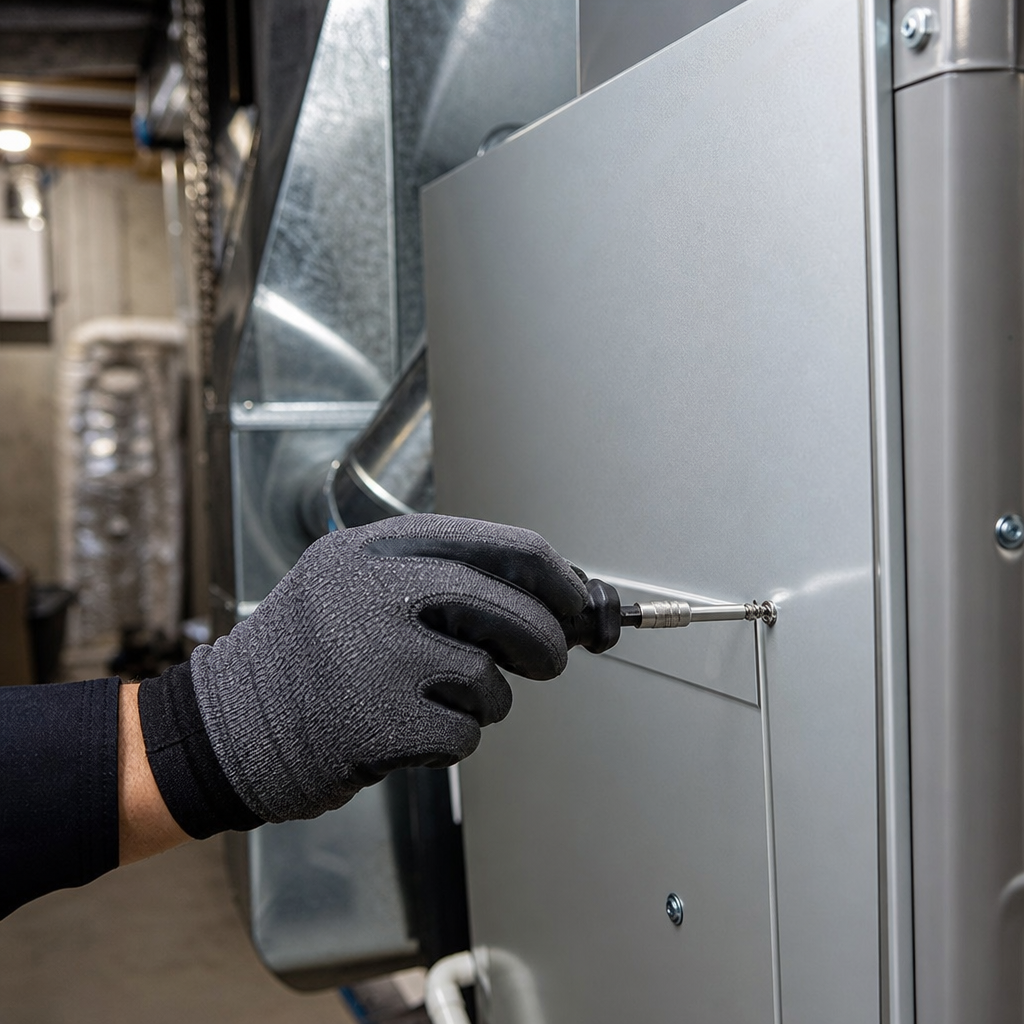
While central duct systems circulate air inside your home, secondary exhaust systems move moisture and fumes outdoors. Dryer exhaust vents run through walls, attics, and crawlspaces, accumulating flammable lint over time.
When lint builds up in a dryer run, clothes take multiple cycles to dry, appliance temperatures climb, and the risk of a house fire increases. Clearing these runs from the appliance collar out to the exterior roof or wall damper helps maintain an unobstructed exhaust path.
Systems and Equipment Serviced
Modern residential heating and cooling equipment includes standard gas furnaces, heat pumps, and dual-fuel configurations from brands like Carrier, Trane, Lennox, Goodman, Bryant, and Daikin. High-efficiency systems with variable-speed ECM blower motors are especially sensitive to airflow restrictions and static pressure imbalances.[3]
Technicians at Meridian Air Duct Cleaning Service Vancouver adjust their agitation tools based on duct composition. Rigid sheet metal trunks tolerate stiff nylon brushes, while delicate flexible duct lines and internal acoustic insulation require softer, non-destructive brush heads to protect duct walls from tears.
When Home Ductwork Actually Needs Cleaning
Because the EPA does not suggest routine cleaning on a fixed calendar schedule, look for specific signs that warrant service:
- Post-Construction Dust: You recently completed a home remodel, drywall sanding, or flooring project while the furnace or air conditioning was running.
- Visible Debris or Puffing: Dust, pet hair, or small debris visibly blows out of supply registers when the blower fan kicks on.
- Infestation: Rodents or insects have entered the ductwork, leaving droppings or nesting material in supply or return runs.
- Visible Mold Growth: Hard surfaces inside the air handler, plenum, or registers show visible microbial growth (suspected mold on insulated surfaces should be verified by laboratory testing).
- Restricted Airflow: Certain rooms receive noticeably weak airflow, pointing to disconnected runs, heavy blockages, or fouled coils.
Frequently Asked Questions
How often should home air ducts be professionally cleaned?
The EPA does not recommend routine duct cleaning on a recurring schedule. Duct cleaning is recommended only on an as-needed basis when specific problems occur, such as visible mold, pest infestations, or excessive debris clogging the system.[4]
Is residential air duct cleaning worth the investment?
Duct cleaning is considered useful when addressing specific problems such as heavy particulate blockages, vermin infestations, or post-construction debris. However, the EPA does not recommend routine cleaning for clean ductwork, and improvements to health, airflow, or energy efficiency are unproven outcomes.
Professional Duct Cleaning Considerations
Mechanical rotary brush tools and continuous negative air collection, as utilized by Meridian Air Duct Cleaning Service Vancouver, can physically dislodge and capture particulate buildup in contaminated ductwork when specific problems occur.
Need residential air duct cleaning?
We’re available now — call for a fast, free estimate.
Sources
- [PDF] DOHS Fact Sheet On HVAC Duct Cleaning – ORS – ors.od.nih.gov (2010)
- Results of a Pilot Field Study to Evaluate the Effectiveness of … – nepis.epa.gov
- Results of a Pilot Field Study to Evaluate the Effectiveness of … – nepis.epa.gov
- Should You Have the Air Ducts in Your Home Cleaned? | US EPA – epa.gov
- Is ventilation duct cleaning useful? A review of the scientific … – nrc-publications.canada.ca (2010)
Related reading: Dryer Vent Inspection – 10% Off & Free Estimate – Same-Day Service
Related reading: Commercial Ventilation Cleaning Near Me in Vancouver | 10% Off & Free Estimate | Same-Day Service
Related reading: Commercial Duct Cleaning – Call Now-10% Off – Same-Day Service – Free Estimate
Frequently Asked Questions
Will mechanical rotary brushes damage flexible ductwork in residential systems?
No, professional technicians use specialized soft-bristle brush heads tailored specifically for flexible duct lines and insulated runs to prevent tears. Meridian Air Duct Cleaning Service Vancouver inspects duct integrity beforehand and adjusts agitation equipment based on whether your system uses rigid sheet metal or flexible tubing.
Why is suction-only vacuuming ineffective for Pacific Northwest homes?
High ambient humidity across the Pacific Northwest mixes with dust, dander, and cooking oils to create a tacky film that firmly adheres to duct surfaces. Meridian Air Duct Cleaning Service Vancouver utilizes mechanical rotary brushes to physically scrub away this sticky bond before HEPA negative air containment extracts the debris.
How do I schedule same-day residential air duct cleaning and claim a discount?
Homeowners can call (833) 637-3677 directly to request a free, no-obligation estimate with Meridian Air Duct Cleaning Service Vancouver. Booking your appointment unlocks a 10% discount on thorough, same-day residential duct and ventilation cleaning.
About the author
 |
Sarah Jenkins Sarah is an HVAC professional with over 8 years of experience in residential and commercial indoor air quality. She holds a degree in Environmental Science from Washington State University and is certified by the National Air Duct Cleaners Association (NADCA). Her expertise focuses on educating the Vancouver community about efficient HVAC maintenance and effective contaminant removal strategies. |
Dusty vents or weak airflow at home?
We’re available now — call for a fast, free estimate.
Call Now - Free Estimate